National Bike to Work Day

May 16, 2013 by:

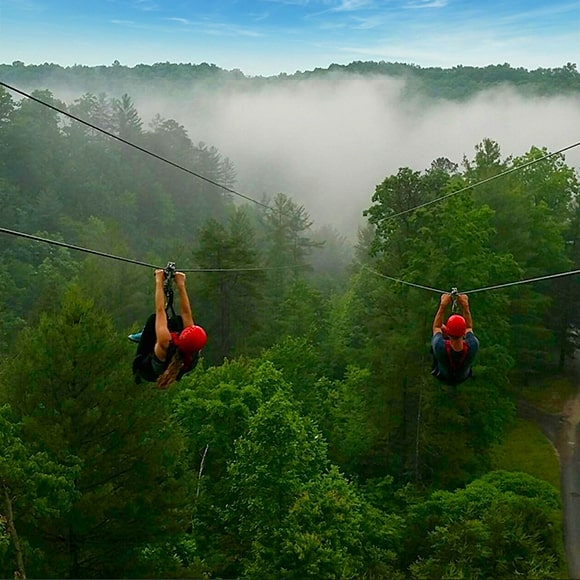
Got an email from Becky Brun at Gorge Owned this morning. Did you know that 28% of all commutes in the U.S. are just 1 mile or less, and 12% are 2 miles are less? And for every mile ridden, one pound of CO2 is saved from the atmosphere? I didn’t know these cool bits of commuter trivia, but glad to learn!  She also let me know that tomorrow is National Bike to Work Day, so leave your car at home and walk or bike to work! Of course that is easy for me to say, since I work at home, but what the heck, break out that bike, you won’t regret it! It does call for a chance of rain tomorrow, so don’t forget your rain gear! image6 1024x768 National Bike to Work Day

Coal dust lawsuit

April 12, 2013 by:

On April 2, The Sierra Club and allies announced their plan to sue the coal industry and the railroads for allowing coal dust to blow off their cars and leak out the bottom. They identified several places in the Gorge including Horse Thief Lake and Dallesport where the coal dust was several inches deep next to the river.
Columbia Riverkeeper also floated some clean containers in the water and determined that coal dust was presently being released into the river. This seems to be a violation of the Clean Water Act.
I don’t know about Oregon, but in Clark County, if the County Commissioners allowed builders to track dust near a storm drain, the Commissioners would each be fined $25,000 per day per outfall. Why is the coal industry allowed to dump dust in the river, and other people aren’t?
Dust of any kind settles on, and rots, salmon eggs and the eggs of the bugs that juvenile salmon eat. The coal industry is planning to export 30 miles of coal trains per day through the Gorge. Trains will cross dozens of salmon bearing streams before reaching the proposed terminals in Longview, Clatskanie, Boardman, and Bellingham.
In 2005, the White House said that for every $1 we spend reducing diesel emissions, we’d save $4 in health care costs. Since then we’ve spent millions cleaning the diesel engines of school buses, long haul trucks and public transit. We did this to protect our health and blue skies, not to provide room for 1300 diesel locomotives and 100 tugs to traverse our air-shed every week. Locomotives won’t begin to meet the new emission standards until 2016.
This summer there will be a public hearing regarding the proposed Longview Terminal. If you want to be notified, write to [email protected]
Cheers to the Sierra Club for protecting salmon and air quality.


By Don Steinke of Vancouver, Washington

Rail walk about coal dust

April 5, 2013 by:

Citizens concerned about COAL exports will meet at 10 am Saturday April 6 in Washougal on Main Street between Love and Pendleton. From there we will walk along the tracks for about a mile and then return to Amnesia Brewing for an optional beer. This event is organized by the coal exports subcommittee of the Sierra Club. Join us if coal exports concern you.

Coal Fires: A Major Possibility Along the Gorge

March 22, 2013 by:

By BARBARA G. ELLIS, Ph.D

The possibility of fires at coal terminals should be a major factor, seemingly ignored, in the current federal/state investigation involving Ambre Energy, Kinder Morgan, or any coal company seeking site permits at Boardman, Longview, and Columbia County—or at Coos Bay. They are unlike any other fire and cannot be extinguished by water. Water only sets off explosions and intensifies a blaze.

A contributing factor, equally major, is that most fire departments near new coal-storage terminals lack training programs, equipment, and supplies vital to any firefighter. That is the warning and recommendations issued in a recent national report from the Centers of Disease Control and the National Institute of Occupational Safety and Health.

Coal hot 1024x680 Coal Fires: A Major Possibility Along the Gorge

Spontaneous combustion has long been recognized as a fire hazard in stored coal, seemingly ignored in the current federal and state investigation of new proposed coal terminals in the NW.

The report was spurred by the deaths of two young South Dakota firefighters who lost their lives in 2011 when they poured water down a storage silo holding Powder River Basin coal. It set off an explosion that intensified the flames. Neither they nor their fellow firefighters had coal-fire training. Nor did their station have the special haz-mat equipment (monitors, piercing rods, etc.), or special coal-fire chemicals (F-500, etc.).

As the U.S. Department of Energy officials has pointed out:

“Spontaneous combustion has long been recognized as a fire hazard in stored coal. Spontaneous combustion fires usually begin as “hotspots” deep within the reserve of coal. The hotspots appear when oxygen seeps into stored coal. Heat generated by the oxidation then initiates the fire.”

Once a “hotspot” finally explodes, it ignites a fierce and almost unquenchable fire engulfing whole areas, such as the uncontained 100-year-old mine fire that still burns in Glenwood Springs CO. It surfaced in 2002 and set off a 12,000-acre, $6.5 million forest fire. Environmentally, a coal fire of any kind—mine, terminal, barge, train—emits “a haze of soot, carbon monoxide and compounds of sulfur and nitrogen…also releases arsenic, fluorine and selenium.”

Wyoming’s Powder River coal, at issue in the Pacific Northwest, is significantly even more volatile than coal mined east of the Mississippi River. Indeed, in weighing the speed of a coal-ignited explosion (the Kst value) leading to a fire, researchers for Western Kentucky Energy Corporation, noted: “… the explosibility of PRB coal can be up to two times that of bituminous coal.” Those familiar with this sub-bituminous coal say that it cannot be stored for more than 14 days without hotspots appearing.

Moreover, when coal ignites after quietly smoldering as a “hotspot” under deliveries of fresh coal—even under Ambre’s proposed covered terminal—it requires highly trained coal-fire personnel to extinguish the blaze. Indeed, utility companies storing PRB coal have been so concerned about this hazard that they formed a group called PRB Coal Users’ Group. They have on-call coal-firefighting providers such as F.E. Moran Special Hazard Systems and Hazard Control Technologies.

Such firms exist because coal companies can’t rely on local firefighters dealing with 26-foot mountains of stored coal. Or stored inside terminals—or silos, as was the fatal case in Britton, SD. Water sets off such explosions and additional fire because “heat ignites floating coal dust in the air.” Water also makes remaining coal unmarketable.

Those specialty squads use state-of-the-art tools such as thermal monitors and infrared scanners to check hot spots in stored coal and carbon monoxide levels, respectively. (This is a 24/7 job—without smoke/coffee breaks.) Hazard-mitigation systems use the new F-500 agent and piercing rods that must be expertly guided through a coal pile to find a hotspot.

In the Columbia Gorge, the likelihood is that Ambre and Kinder Morgan probably will rely on the local fire department such as Boardman’s seven firefighters or those near Port Westward—none trained for coal fires—to handle a Glenwood Spring-like conflagration. That means local taxpayers will wind up footing the bill for training, equipment, and supplies. And fighting fires.

Ambre’s vow of covering its terminal—as well as barges, trains—to keep the Gorge’s ferocious winds from blowing toxic coal dust into communities, will hardly block oxygen seepage into stored coal. If coverage were remotely successful, it would have been done decades ago by Eastern coal companies. They still transport and store most coal “uncovered” because of combustion and subsequent ruinously expensive litigation over fires, environmental damage, as well as losses of life and property damage.

As for the Port Westward site—including Kinder Morgan’s proposed terminal—Ambre Energy officials say it will only include a shiploader and its dock to move coal from barges to ocean-going freighters bound for Asian markets. Yet twice last year at Longview (April and November), a shiploader’s machinery and conveyor belt caught fire moving grain to freighters. The prospect of a coal fire spreading from shiploader to a freighter’s hold and back to barges—and nearby vegetation—and timber near Clatskanie and Ranier—in dry months, is entirely possible.

Before any permits are issued for Ambre or any other coal shipper to construct and utilize terminals in the Gorge, a thorough investigation must be done by federal and state agencies about their fire-protection histories for terminals and surrounding environment. Moreover, affected communities up and down the Gorge need to ask these vital questions of Ambre and Kinder Morgan: Are they willing to underwrite all the expenses involved in training, equipping, and supplying local fire departments to fight coal-storage fires? Are they willing to pay the wages of local firefighters involved in putting out a coal fire? Are they willing to pay for all damages to neighboring properties if a coal fire should spread beyond their company fences?

Any promises to take care of these responsibilities by Ambre and Kinder Morgan should be put in a contractual document with those affected communities long before permits are issued. And state and federal agencies need to consider the coal-fire factor in issuing those permits.

__________________________

Barbara G. Ellis, Ph.D, a former journalism professor at Oregon State University, is now a principal at Ellis & Associates, LLC of Portland. She is an environmentalist, a member of the Columbia Gorge Protection Alliance, and lives in Southeast Portland.

Wind Turbines in the Columbia Gorge

December 5, 2012 by:
bigstock Wind energy technologies 21461495 300x200 Wind Turbines in the Columbia Gorge

What Happened to the Beautiful Scenic Columbia Gorge?

What Happened to the Beautiful Scenic Columbia Gorge?

I love the Columbia Gorge! I love driving the old highway. I love driving I-84. I just love the Columbia Gorge. It’s scenic. Historic. And just beautiful!


I’ve often imagined what Lewis & Clark thought as they made their way along the river. What must the Pioneers been thinking as they trudged along the river?


So last October as I headed eastbound out of Portland, I was excited about heading to Weston to participate in their annual Umatilla County Potato Show. I had not been east of Portland for a few years. So I was extra excited about leaving Portland behind me with the thought of cruising along the Columbia River and re-connecting with the gorge .


Everything was going great as I drove down I-84. The trees were turning from green to shades of gold and red and brown. The Vista House was sitting up there on the hills as the “crown jewel” of the Columbia Gorge. I stopped off in The Dalles to grab my Dutch Bros Latte. Plus, I just like driving through The Dalles when I’m heading through. Lots of historic buildings to check out.


So I’m cruising east and as I get past Rufus, I am stunned! What the heck?!! Wind turbines are covering the once bare hillsides of the gorge! I almost drove off the road! I could not believe what I was seeing! Wind turbines marching down the gorge on both sides of the river.


Wind turbines! Tall. Ugly. Big white propellers slowly turning in the wind. Like huge giants standing sentinel on the hillside. Only they weren’t going to go away any time soon. They were securely planted in the ground on their concrete pads.


The beauty of the Columbia Gorge had been desecrated! I couldn’t believe what I was seeing. I couldn’t believe that this was allowed! And then I realized that the Columbia Gorge Scenic area didn’t stretch to this end of the gorge. And that saddened me.


I’m the first to understand progress. I completely understand the money to be made by land owners who allow the wind turbines to be erected on their land. Although that’s questionable at this point. But to the desecration of the beauty of the Columbia River Gorge?


Granted, this end of the gorge is usually just brown, dried grasses, and rocks. But even in that, there is beauty. It’s beautiful in the Spring when the grass is green and everything is born again and then it slowly changes to brown as the heat of summer begins to dry out the land.


As I drove down I-84 I wondered to myself what visitors to the area must think. Have they heard how beautiful it is here and then the first thing that they see are wind turbines marching up and down the gorge as they head West; or East as the case may be?


When I lived in Pendleton it was kind of neat to see the wind turbines on the hills outside of Milton-Freewater. They had just started building them out there. But, they were away from the populated areas. They were far away. They didn’t impact the beauty of the landscape like the wind turbines do along the Columbia Gorge. Here, along I-84, it’s more like a slap in the face as you round the bend in the road and come smack up close and personal with the giants.


Thankfully, the turbines don’t last for long and you are afforded an unobstructed view of the river once again. But still…


As I returned to Portland that weekend I was thankful that I would be driving back in the dark. I wouldn’t have to see those ugly wind turbines. But I was mistaken; the red flashing warning lights attached to the behemoths were a constant reminder of what was out there in the dark.


Submitted by Trish Neal


Pros and Cons of Coal Exports

October 11, 2012 by:
bigstock River Gorge Train 3491101 300x179 Pros and Cons of Coal Exports

Coal exports through the Columbia Gorge

Supporters and opponents of proposed coal export terminals in the Northwest made their case before the Rotary Club of Vancouver this month. Speakers in the two-part series of presentations didn’t cover much new ground in the region-wide debate — both made familiar arguments for or against sending Asia-bound coal through the Northwest, mostly by train. But the presentations put a local spin on a conversation that’s so far mostly played out beyond Clark County.

Read more:

Pros, cons of coal export plan explained

How Many Jobs Will Coal Shipments Really Generate?

October 10, 2012 by:
Job Creation 300x260 How Many Jobs Will Coal Shipments Really Generate?

How Many Jobs will Coal Exports Really Produce?

Back in February 1981, Gov. Vic Atiyeh eagerly hosted 200 representatives of Big Coal, Big Rail, Big Banks and the U.S. Army Corps of Engineers in his push to build a coal export terminal on more than 90 acres of prime Portland riverfront. The Columbia River Gorge was to be the coal chute from Wyoming’s Powder River basin mines for coal-desperate Pacific Rim countries. His office and the state, he said, would back him. Hundreds of jobs were envisioned. He soon wielded a gold-plated shovel in groundbreaking ceremonies with Pacific Coal Corp.

Result: Two years later, despite the Port of Portland and investors spending $25 million on the venture, it died because, according to The Oregonian: “The Asian demand was based on promises … (and) the demand for coal had been vastly overstated.” The coal-company skedaddle set off a minefield of investor lawsuits and workers’ fury. A decade later, Los Angeles was taken for $47 million.

Read original article:

How many jobs will coal shipments really generate?


Cape Horn Conservancy

October 2, 2012 by:

Living in Washougal, I am lucky enough to have quick access to the Cape Horn trail, which is perhaps my favorite hike in The Gorge, though admittedly I have not hiked them all, not even close! According to Cape Horn Conservancy, The Cape Horn trail, as we know it, has been around to some extent for about 15 years. Cape Horn Conservancy is an all volunteer non-profit dedicated to providing thoughtful stewardship of this trail and surrounding public lands in the Washougal to Stevenson corridor. They work closely with the United States Forest Service (USFS), Washington Trails Association (WTA), and Friends of the Columbia Gorge (FOCG) to maintain and improve the existing trail and plan for its eventual integration into a Washougal to Stevenson trail system. The vision of this trail is a world-class hiking destination; a jewel of the Columbia Gorge National Scenic Area trail system.

The Columbia River Gorge National Scenic Area has spent about $785,000 to complete its part of the improvements on the seven-mile trail. The Friends of the Columbia Gorge put in about $150,000 to build the Nancy Russell Viewpoint and the Washington State Department of Transportation spent about a half-million building two pedestrian underpasses beneath State Route 14.


Cape Horn Trail Maintenance reduced 199x300 Cape Horn Conservancy

Cape Horn trail maintenance parties.


The Cape Horn Conservancy, has been having, and is going to be having some upcoming work parties, for anyone who is interested in volunteering. These work parties are limited to 10 people.

Here is a notice that was published by Teresa Robbins, The President of the Cape Horn Conservancy.

-October work events will be developing a “permanent fix” to a historical mud problem on the first 450′ of the trail… Your support in the past and the FUN raiser raised the funds, the materials are delivered and sheltered and now we could use a little help putting it all together. We’ll be clearing and widening the trail a bit, laying fabric, installing log curbs and raising the bed with 6-8″ of gravel. Come and join in the fun!


Cape Horn Work Party 2 300x225 Cape Horn Conservancy

Cape Horn work party.


CHC Cape Horn Trail work parties:

Saturday, October 13

10am – 3pm

Friday, October 26 10am – 3pm

Other Cape Horn Trail work opportunities available through Washington Trails Association:

Thursday, October 4th 8:30 am – 3:30 pm http://vols.wta.org/web/web.pl?sm+19882+WP

Thursday, October 11th 8:30 am – 3:30 pm  http://vols.wta.org/web/web.pl?sm+19903+WP

Thursday, October 25th 8:30 am – 3:30 pm http://vols.wta.org/web/web.pl?sm+19928+WP

If you would like to volunteer Click here


__________________________________


October 2, 2012. Submitted by Kenny Bavoso of TheGorge.com

Massive Wind farm begins operating near Arlington

September 24, 2012 by:
bigstock Wind energy technologies 21461495 300x200 Massive Wind farm begins operating near Arlington

Wind Farm Begins Operation near Arlington, Oregon

A massive new wind farm is now generating energy in Oregon along the Eastern Columbia River Gorge. Wind turbines are spinning at the 845-megawatt Shepherds Flat Wind Farm near Arlington.

From:

Massive wind farm begins operating in Gorge

Plentiful Fall Chinook Run

September 15, 2012 by:

The fall chinook migration should peak this week in the Columbia River Gorge. As it does, some 400 Native American fishermen from the four tribes allowed to fish in the 147 miles between Bonneville and McNary dams will be furiously minding nets.

fishing nets1 200x300 Plentiful Fall Chinook Run

Plentiful Fall Chinook Run in The Columbia Gorge

See more here:

Plentiful fall chinook, savvy tribal fisherman hit the Columbia River for peak …